

AI is revolutionizing healthcare by enhancing diagnostics, streamlining operations, and personalizing patient care. Advanced algorithms now assist in medical imaging, patient monitoring, clinical decision support, and administrative tasks. For example, AI-powered diagnostic tools often match or exceed human expert accuracy in interpreting X-rays and MRIs. Virtual assistants and remote monitoring expand access to care, while hospital systems use NLP to automate paperwork. This article explores key healthcare AI use cases, the models and tools behind them, and how solutions are validated and governed for safety and efficacy.
Diagnostic Imaging and Analysis
AI excels at interpreting medical images. Deep learning models (especially convolutional neural networks) are trained on vast datasets of scans to detect abnormalities. Examples include:
- Radiology: AI algorithms identify lung nodules on chest CTs or fractures on X-rays. FDA-approved systems (e.g. IDx-DR) automatically detect diabetic retinopathy in retinal images. Studies show AI often outperforms clinicians in tasks like cancer detection.
- Pathology: AI analyzes tissue slides (via digital pathology) to quantify tumor cells or predict disease subtypes from biopsy images.
- Ophthalmology/Dermatology: AI scans retinas or skin lesions for early disease markers.
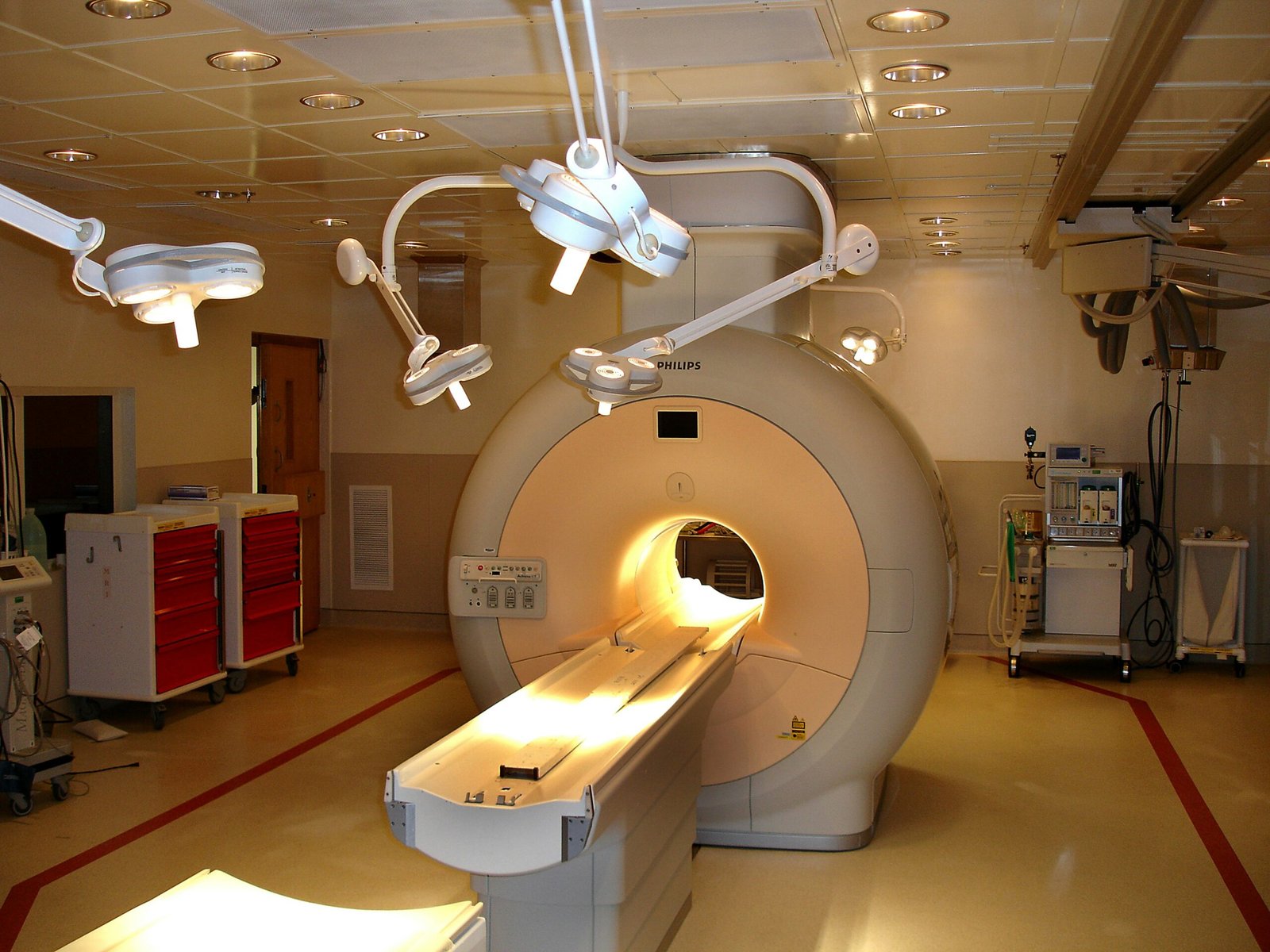
Advanced imaging equipment, like MRI and CT scanners, produces the scans deep learning models are trained to read alongside radiologists.
Models are validated via clinical trials and retrospective studies. Key metrics are sensitivity and specificity compared to human gold standards. Because these tools directly impact patient care, regulatory approval is required (FDA clearance or CE marking). Hospitals continuously monitor performance, ensuring AI accuracy remains high as new patient populations emerge.
Electronic Health Record (EHR) Automation
Administrative burden in healthcare is enormous. AI reduces this by extracting and organizing data from clinical records:
- NLP & Summarization: Models process doctors’ notes to auto-fill problem lists, highlight medications, or draft discharge summaries. Large language models fine-tuned on medical text (e.g. BioGPT, Google’s Med-PaLM) can generate readable patient summaries from raw EHR data.
- Coding & Billing: NLP systems translate diagnoses into billing codes (ICD-10, CPT), speeding up claims processing.
- Speech Recognition: AI transcribes doctor-patient conversations in real time (e.g. Dragon Medical).
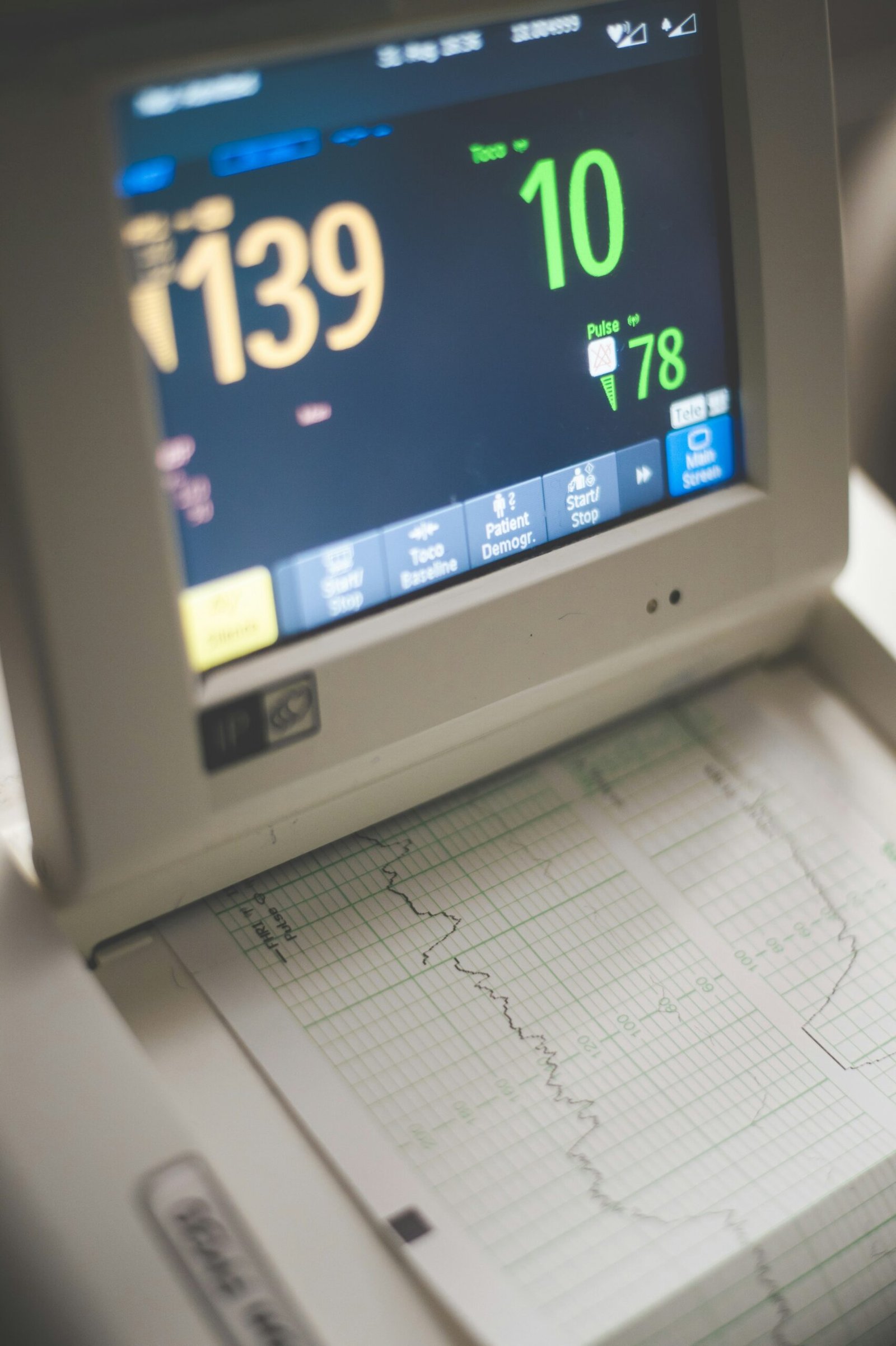
AI-assisted monitoring and charting systems capture the vitals and notes that NLP models can summarize, code, and route automatically.
These AI tools are trained on de-identified EHR datasets. Validation involves comparing AI outputs against clinician records. For example, a model’s summary might be reviewed by a doctor for accuracy. Error rates (like missing a key symptom) are tracked. Data privacy (HIPAA/GDPR) is strictly enforced in all stages; training data is anonymized and systems have robust access controls. Banks and insurers apply the same anomaly-detection principle to transaction and claims data — see our companion article on practical AI use cases in finance for how AI flags billing and claims fraud in a comparable way.
Personalized Treatment & Drug Discovery
AI enables personalized medicine and accelerates research:
- Personalized Medicine: ML models analyze genomics, biomarkers, and clinical history to predict which treatments patients will respond to. For example, AI can suggest cancer therapies tailored to a patient’s tumor genetics.
- Drug Discovery: Generative AI models (like those used by companies such as Insilico) propose new molecular structures and predict their efficacy, greatly speeding up early-stage research.
- Literature Review: Large language models assist researchers by summarizing the latest medical studies. Specialized AI (e.g. Consensus, PubMedGPT) sift through journals to provide evidence-based insights.
While promising, these applications are usually in R&D phases. Validation here includes laboratory experiments and clinical trials. For generative models, accuracy may be gauged by expert review or by progress through preclinical pipelines. Ethical oversight is crucial due to patient safety.
Patient Engagement and Virtual Assistants
Chatbots and voice assistants are improving patient interaction:
- Symptom Checkers: Apps like Babylon or Buoy use AI to triage symptoms before seeing a doctor. These systems use medical LLMs to ask follow-up questions and suggest possible conditions.
- Virtual Assistants: Some hospitals provide AI-powered assistants (via apps or smart speakers) to remind patients about medications, exercise, or follow-up care.
- Information Retrieval: Dedicated medical chatbots (e.g. an “Internal Medicine GPT”) can help clinicians find answers quickly in electronic resources.
However, caution is emphasized in healthcare. Mayo Clinic notes that while patients often try ChatGPT or Gemini for health advice, clinicians prefer models trained on peer-reviewed data (OpenEvidence, Consensus). General LLMs can confidently produce misinformation or “hallucinate” references. Therefore, patient-facing AIs are thoroughly tested in pilot studies. Hospitals may first offer AI advice with a physician review (“AI-assisted triage”) and compare its recommendations to standard protocols before full deployment.
Doctor consultationthen
AI review
Remote Monitoring and Predictive Alerts
Wearable devices and sensors generate continuous health data. AI models analyze this to provide early warnings:
- Chronic Disease Monitoring: Algorithms detect arrhythmias from smartwatch ECG data (Apple’s A-Fib alerts) or predict glucose trends for diabetics.
- Hospital Alerts: In ICUs, AI monitors vital signs and lab results to predict sepsis or cardiac arrest hours before symptoms appear.
- Pandemic Surveillance: Public health agencies use AI on aggregated data to identify outbreak hotspots or predict disease spread.
These models use time-series ML (LSTM, temporal CNNs) and are validated with retrospective patient data. For example, a sepsis model is trained on historical ICU records and tested prospectively to see how early it can predict a shock event. Performance is measured by lead-time gained and reduction in adverse events. Regulatory considerations apply (some predictive alerts now require FDA oversight).
Administrative Efficiency & Workflow
AI optimizes healthcare operations:
- Scheduling and Billing: Robotic Process Automation (RPA) bots book follow-ups, verify insurance eligibility, and code claims.
- Smart Triage: NLP classifies incoming patient emails or medical records, routing urgent issues to doctors.
- Resource Allocation: ML models predict hospital admission rates, helping manage staffing and supply inventory.
For example, a hospital might use AI to predict no-shows or optimize operating room schedules. These tools are validated by operational metrics (reduced wait times, decreased admin cost). Typically, hospitals pilot in one department (e.g. radiology scheduling AI) and compare before/after performance.
Tools, LLMs, and Compliance
- Models: Healthcare AI uses CNNs for images, transformer/RNN models for time-series, and LLMs (e.g. Med-PaLM, BioBERT) for text. Some systems are proprietary, while others use open models with medical fine-tuning.
- Platforms: Common platforms include Google Cloud Healthcare, AWS HealthLake/Comprehend Medical, and Microsoft Azure AI for Health. Teams use PyTorch or TensorFlow to build models, often integrating with clinical systems via FHIR APIs.
- Regulation: Patient safety and privacy govern all AI. In the U.S., most clinical AI tools must receive FDA clearance as medical devices. Data usage must comply with HIPAA/GDPR. Explainability (e.g. showing which data influenced a prediction) is often required. Ethical oversight committees review AI’s clinical role (especially for diagnostic/advisory systems).
Key Takeaways
- 1
Improved Accuracy: AI tools (like imaging analyzers) can match or surpass clinician performance in diagnostics, potentially leading to earlier detection and treatment.
- 2
Enhanced Access: Virtual assistants and remote monitoring bring care outside hospitals, increasing patient engagement. But they must be validated in trials and used with professional guidance.
- 3
Efficiency Gains: Automating records and admin tasks frees up healthcare workers to focus on patients.
- 4
Cautious Rollout: Given the stakes, healthcare AI requires rigorous testing, clinical validation, and ethical oversight. Collaborative design with doctors and continuous monitoring are essential for safe deployment.
References
- Sah et al. (2025). “The Impact of Artificial Intelligence on Healthcare” – comprehensive review noting AI’s diagnostic accuracy and efficiency gains.
- Mayo Clinic (2025). “Seeking Self-Care Info in the Age of ChatGPT” – discussion of patient use of general chatbots vs specialized medical LLMs.
- IBM & industry sources on clinical AI (radiology AI, EHR NLP, virtual assistants).