
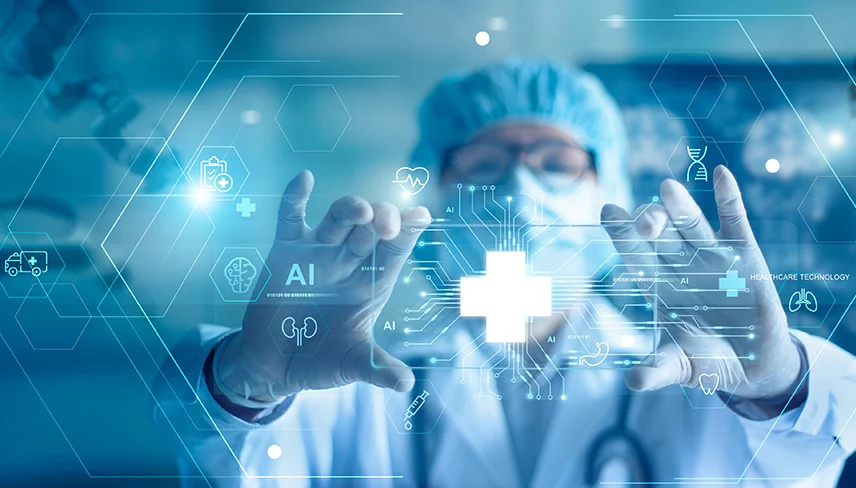
Imagine a patient with a heart condition who wears a smart ECG monitor. One day, the device detects an irregular heartbeat and instantly alerts a nearby hospital, allowing doctors to intervene before a cardiac event occurs. This life-saving scenario is made possible by edge computing.
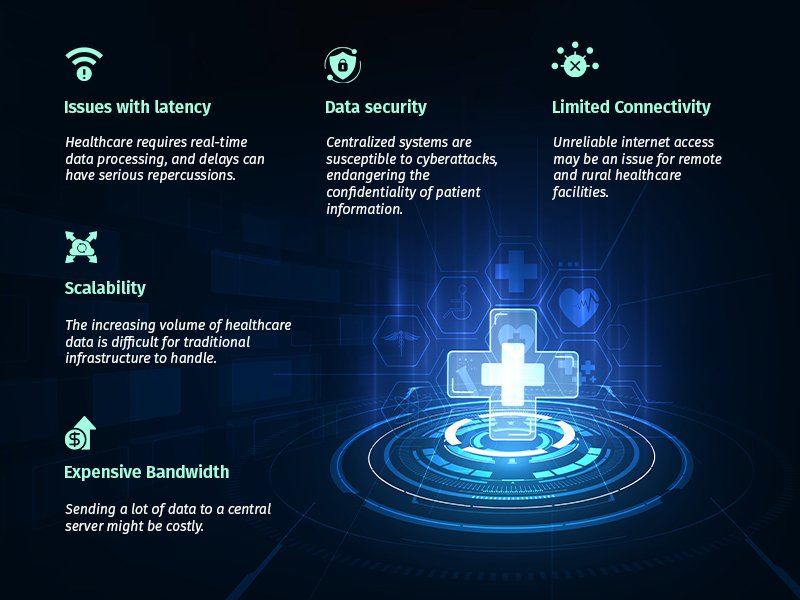
Edge computing is transforming healthcare by enabling real-time data processing closer to the source—whether in hospitals, medical devices, or patient wearables—rather than relying on distant cloud servers. This reduces latency, enhances data privacy, minimizes bandwidth usage, and supports critical real-time decision-making.
Edge computing differs from traditional cloud computing by processing data locally rather than sending it to centralized cloud data centers. This architecture consists of three key components:
By leveraging edge computing, healthcare organizations benefit from reduced latency, enhanced data security, and offline functionality, ensuring critical healthcare services remain operational even during network outages.

As Edge computing grows, it will shape the future of cloud computing and data processing. It makes data processing fast and cuts down on delays. This could change how businesses work and talk to their customers
Wearable devices such as ECG monitors and continuous glucose monitors use edge computing to process patient vitals in real time, reducing hospital readmissions and enabling early intervention.
Medical imaging machines, such as MRI and CT scanners, integrate on-device AI to analyze scans locally, providing instant diagnostic insights without requiring cloud processing.
Edge-powered IoT systems manage hospital infrastructure, optimizing bed allocation, energy consumption, and medical equipment tracking, improving efficiency and cost savings.
Ambulances equipped with edge-enabled devices transmit patient vitals directly to emergency rooms, allowing doctors to prepare treatment plans before arrival.
In rural or low-connectivity areas, edge computing ensures low-latency video consultations, enabling seamless remote healthcare services.
Pharmaceutical companies accelerate clinical trials by using localized data processing, reducing time-to-market for life-saving drugs.

Edge AI will proactively predict patient deterioration by analyzing vitals in real time, enabling early intervention and reducing emergency admissions.

Ultra-low latency networks will support AR/VR-assisted surgeries, remote robotic procedures, and holographic diagnostics in hospitals.

AI models will be trained across multiple decentralized healthcare institutions without exposing patient data, enhancing privacy and compliance.

Edge-powered pacemakers and insulin pumps will autonomously adjust dosages and alert doctors in case of anomalies.
Deploying edge computing in underserved regions will bring advanced healthcare solutions to areas with limited cloud infrastructure.
Implementing Multi-Access Edge Computing (MEC) using 5G technology requires careful planning and execution. The following guide outlines the necessary steps to successfully deploy MEC in a 5G environment.
Mayo Clinic
Uses edge AI to analyze echocardiograms in real time for early detection of heart conditions.
Philips Develops edge-powered wearable biosensors for chronic disease management
GE Healthcare
Leverages edge analytics to optimize MRI machine performance and predictive maintenance.
Edge computing is redefining the future of healthcare by enabling real-time diagnostics, predictive analytics, and enhanced patient care. As 5G, AI, and federated learning continue to advance, edge computing will further improve healthcare accessibility, reduce costs, and enhance medical outcomes worldwide.
The integration of edge computing into healthcare is not just a trend—it is a necessary evolution toward a smarter, more efficient, and patient-centric medical ecosystem.

©Copyright 2026 Edgevelocity All Rights Reserved.